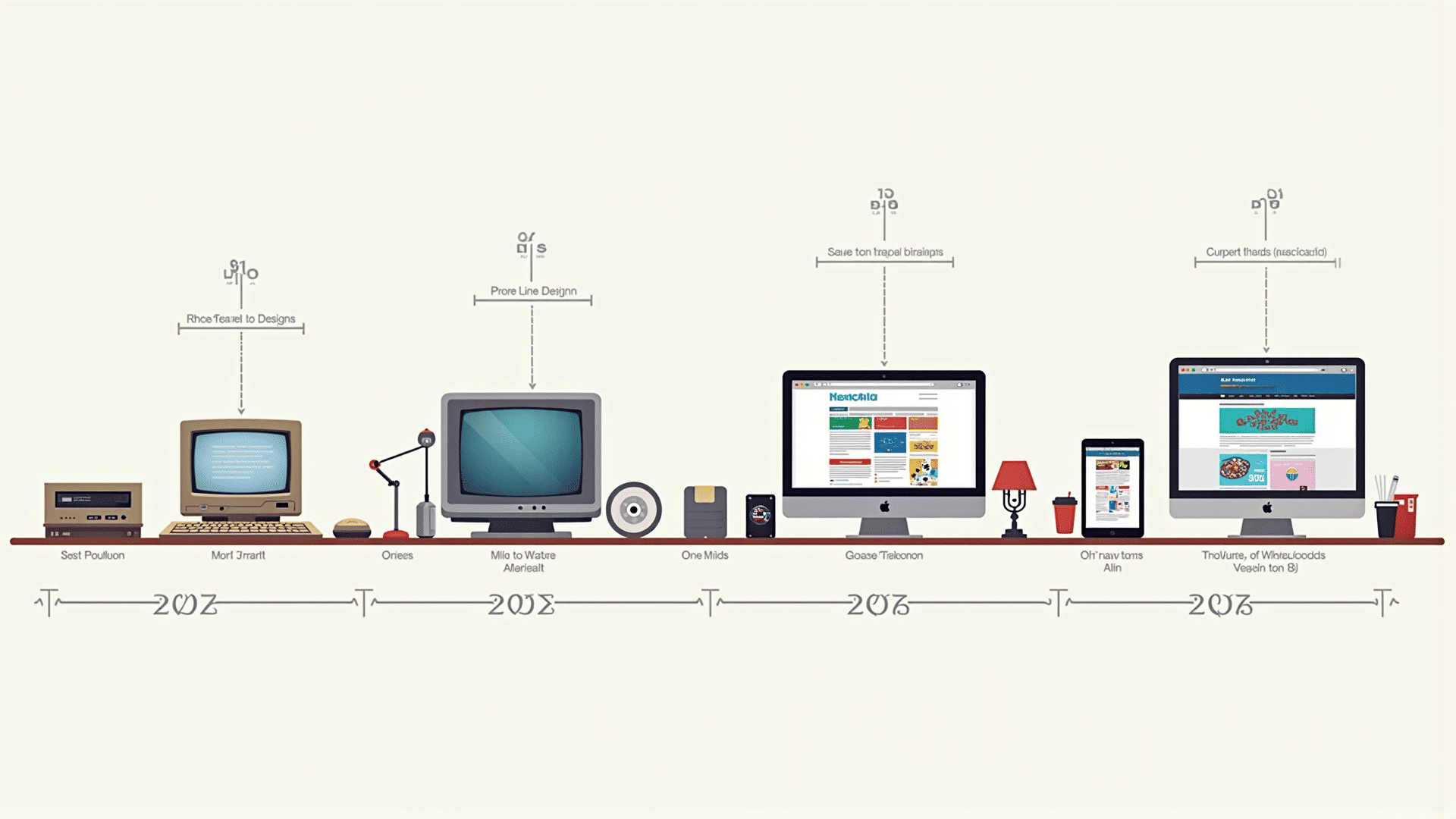
Web design has become a crucial aspect of the digital world, shaping the way we interact with the internet today. Understanding its history and evolution can provide valuable insights into why design is so integral to user engagement.
The origins of web design date back to the early days of the internet, specifically the 1990s. At that time, websites were minimalistic and functioned primarily to display basic information. Web pages used HTML, a standard markup language, to structure content. These early sites were often static, with little to no interactive elements, consisting mainly of text and hyperlinks.
As technology advanced, so did web design. The late 1990s and early 2000s saw the introduction of CSS (Cascading Style Sheets), which allowed designers to separate content from aesthetics. This development was significant because it offered greater flexibility in terms of layout and style. Web developers began experimenting with color schemes, typography, and layout designs, paving the way for more visually appealing websites.
The rise of broadband internet further transformed web design by enabling the inclusion of multimedia elements such as images, audio, and video. This change increased user expectations and demanded that websites offer more engaging, interactive experiences. Websites transitioned from static pages to more dynamic platforms, utilizing JavaScript to create interactive content that responded to user input.
The advent of smartphones and tablets in the late 2000s introduced a new challenge: creating responsive designs that worked seamlessly across various devices. Responsive design principles allowed designers to develop websites that adjusted to different screen sizes and orientations, enhancing accessibility and user experience. This shift emphasized the necessity for intuitive interfaces and easy navigation, ensuring users could interact with sites no matter the device they used.
Modern web design incorporates various disciplines, including user experience (UX) and user interface (UI) design, which focus on optimizing the functionality and aesthetic appeal of web platforms. UX design involves understanding and improving the overall interaction between users and websites, while UI design emphasizes the look and feel of a site. Together, they contribute to creating sites that are not only beautiful but also user-friendly and efficient.
Design matters significantly in the digital landscape because it influences how users perceive and interact with content. Good design can facilitate a seamless experience, guiding users effortlessly through information while engendering trust and encouraging engagement. Conversely, poor design can lead to frustration, confusion, and a negative perception of a brand or service.
As web design continues to evolve, emerging trends such as dark mode, 3D visuals, and augmented reality are becoming more prominent. These innovations promise to further enhance user engagement and push the boundaries of what is possible online.
Embarking on a journey into web design offers the opportunity to be part of a dynamic field that combines creativity with technology. By understanding its history and evolution, one can appreciate the significant role design plays in shaping the digital experiences we rely on today.